TEEM Photonics 266 nm microchip laser
A teardown of a TEEM Photonics 266 nm microchip laser: a compact, passively Q-switched, deep-UV source producing sub-nanosecond pulses. The interesting part is how something this small forms a clean, single-transverse-mode beam.
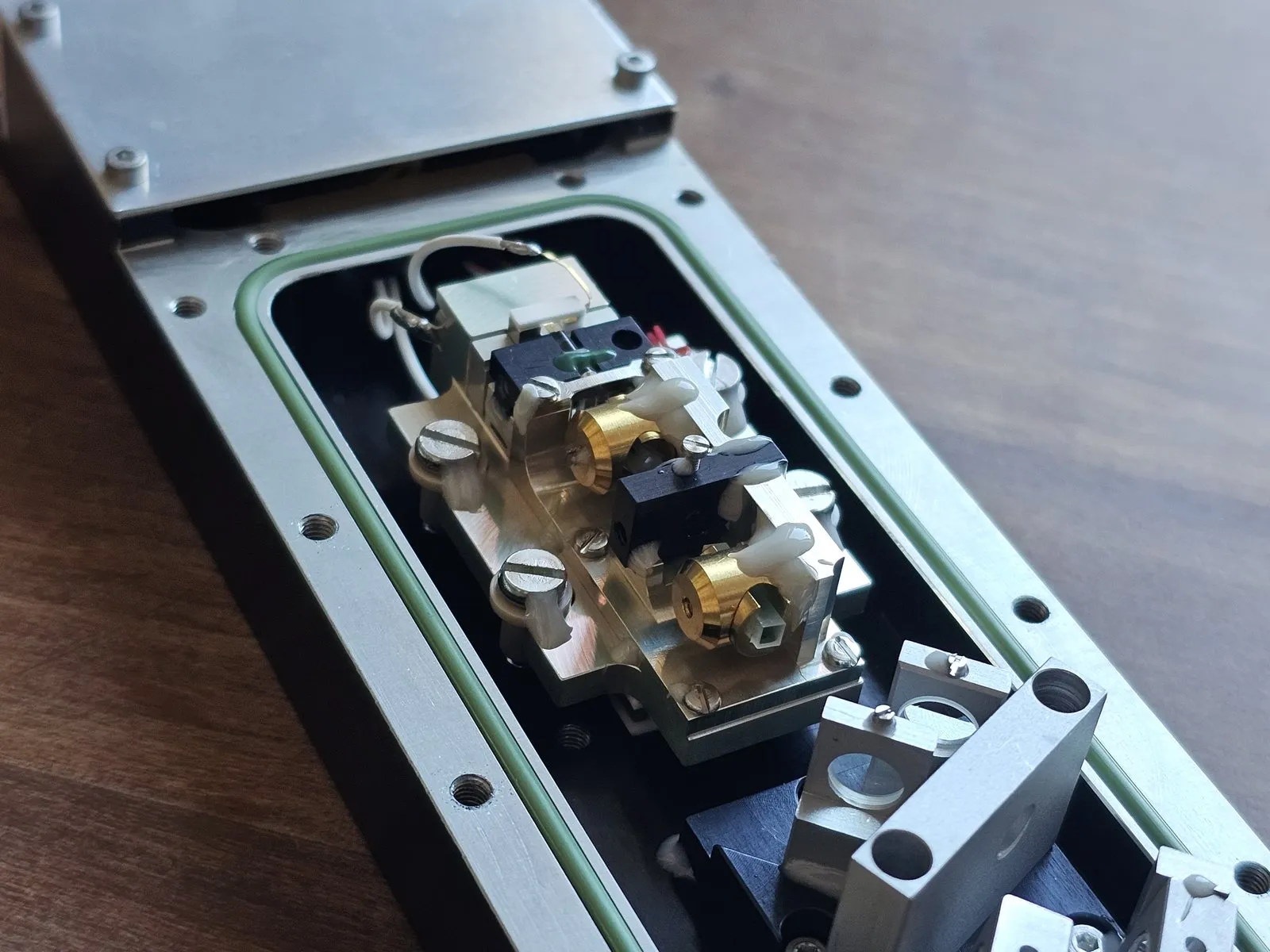
The microchip
This is a passively Q-switched (saturable-absorber) microchip laser. The heart of it is a chip only about 1 mm³, roughly 1 mm on each edge: a highly-doped Nd:YVO₄ gain crystal bonded to a Cr⁴⁺:YAG saturable absorber, which acts as the passive Q-switch. That combination produces about 500 ps pulses at the 1064 nm fundamental.
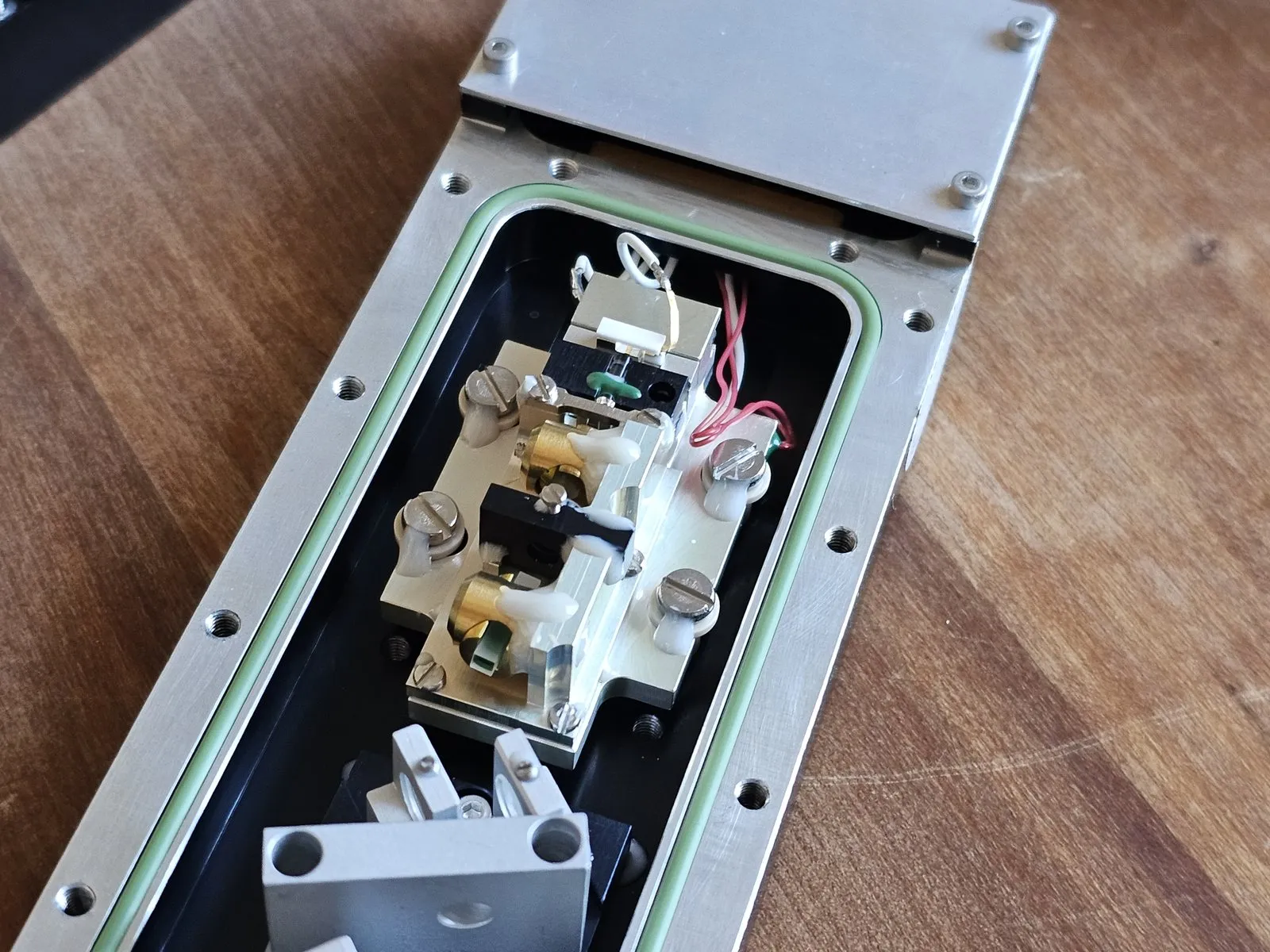
What makes it work is the cavity. Other than the crystal faces it is a plane-parallel (flat-flat) Fabry-Pérot resonator, which on paper is unstable. A stable TEM₀₀ mode forms anyway, purely from the thermal lens in the pumped crystal together with the strong GRIN-focused pump: together they provide the guiding that stabilizes the fundamental transverse mode. No curved mirror required.
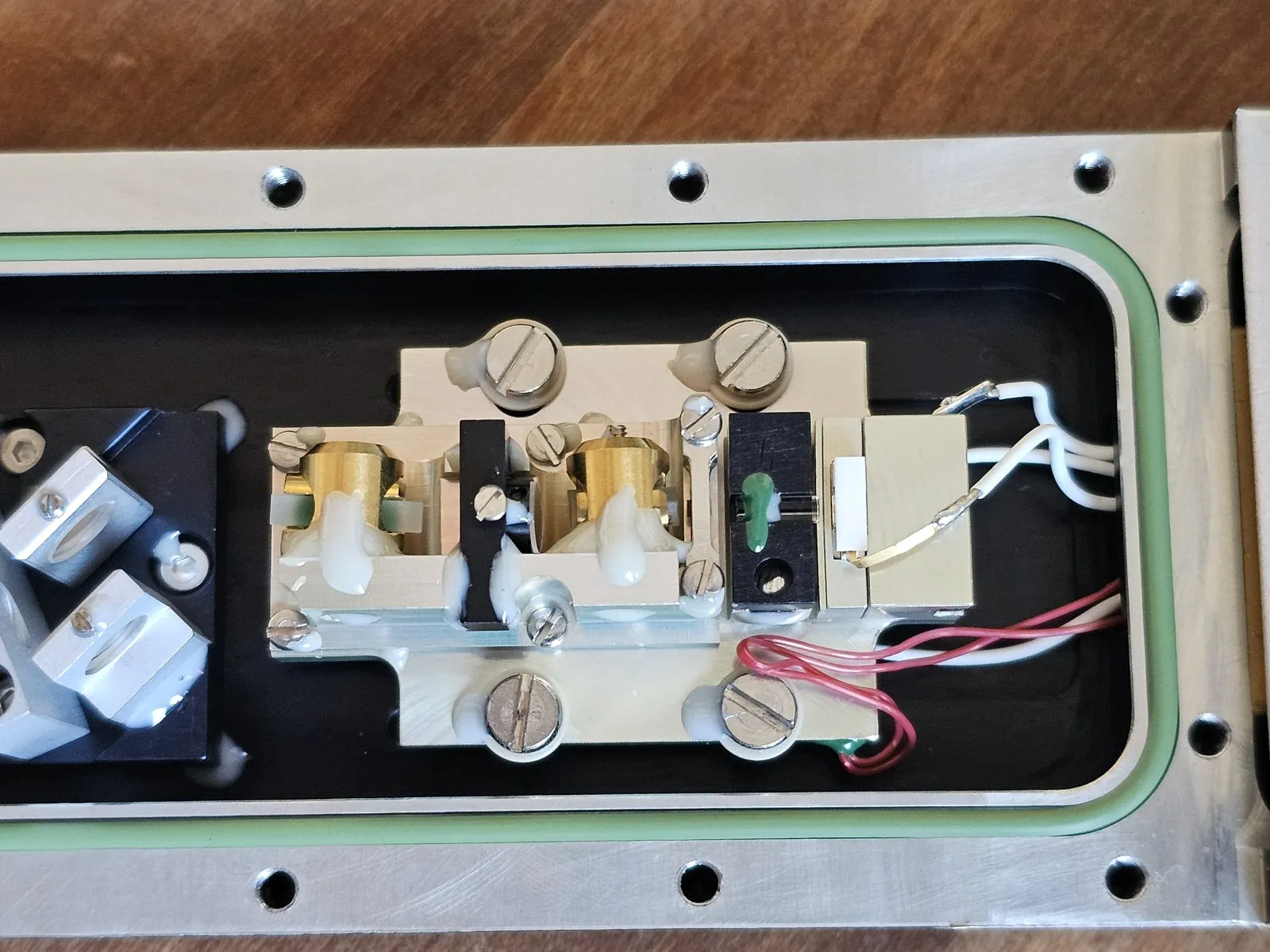
From 1064 nm to the deep UV
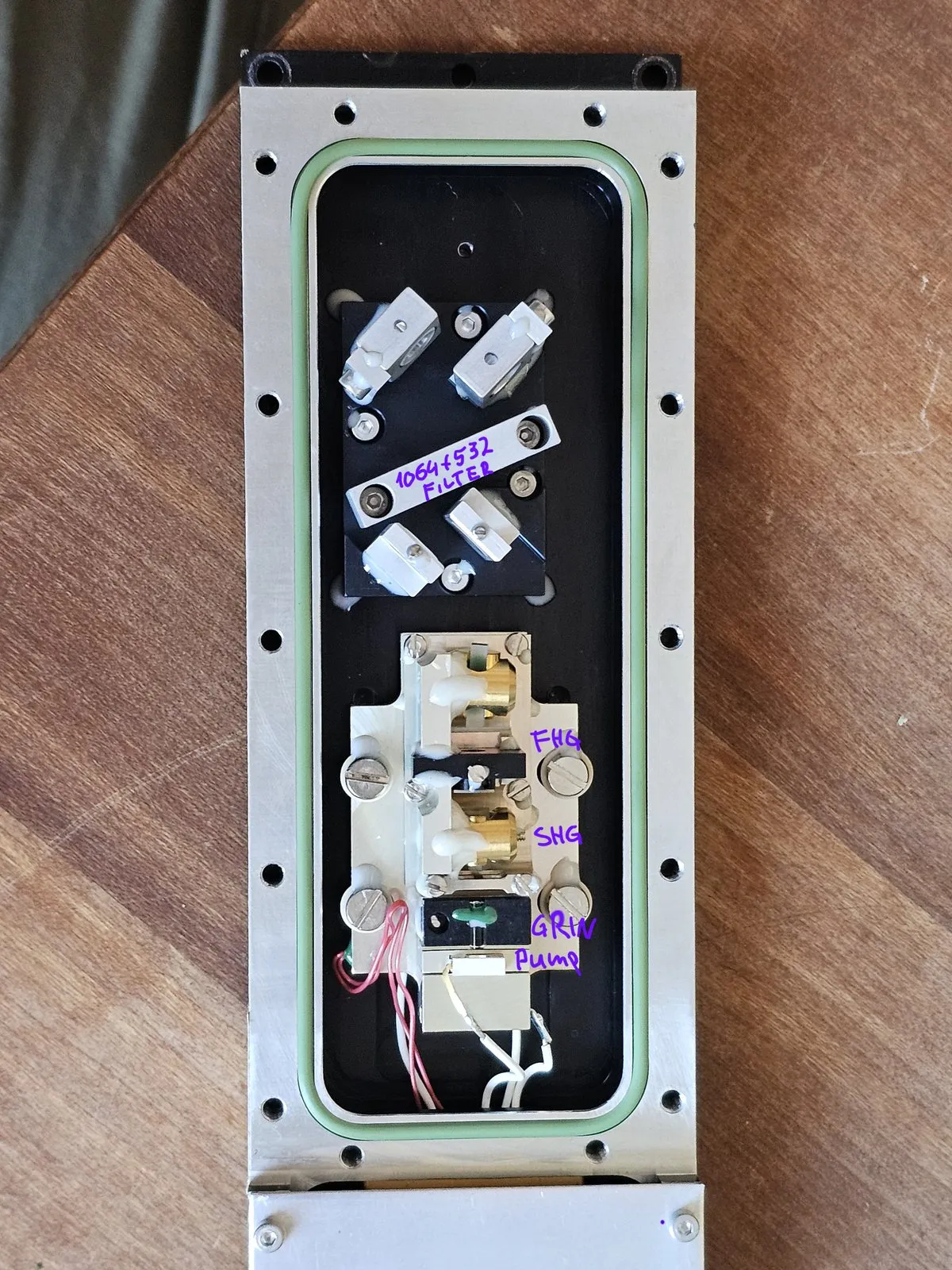
The 1064 nm fundamental is frequency-converted in two stages: second-harmonic generation to 532 nm, then fourth-harmonic generation (SHG of the 532 nm) to 266 nm. A set of harmonic separators then reflects only the 266 nm, dumping the residual 1064 and 532.
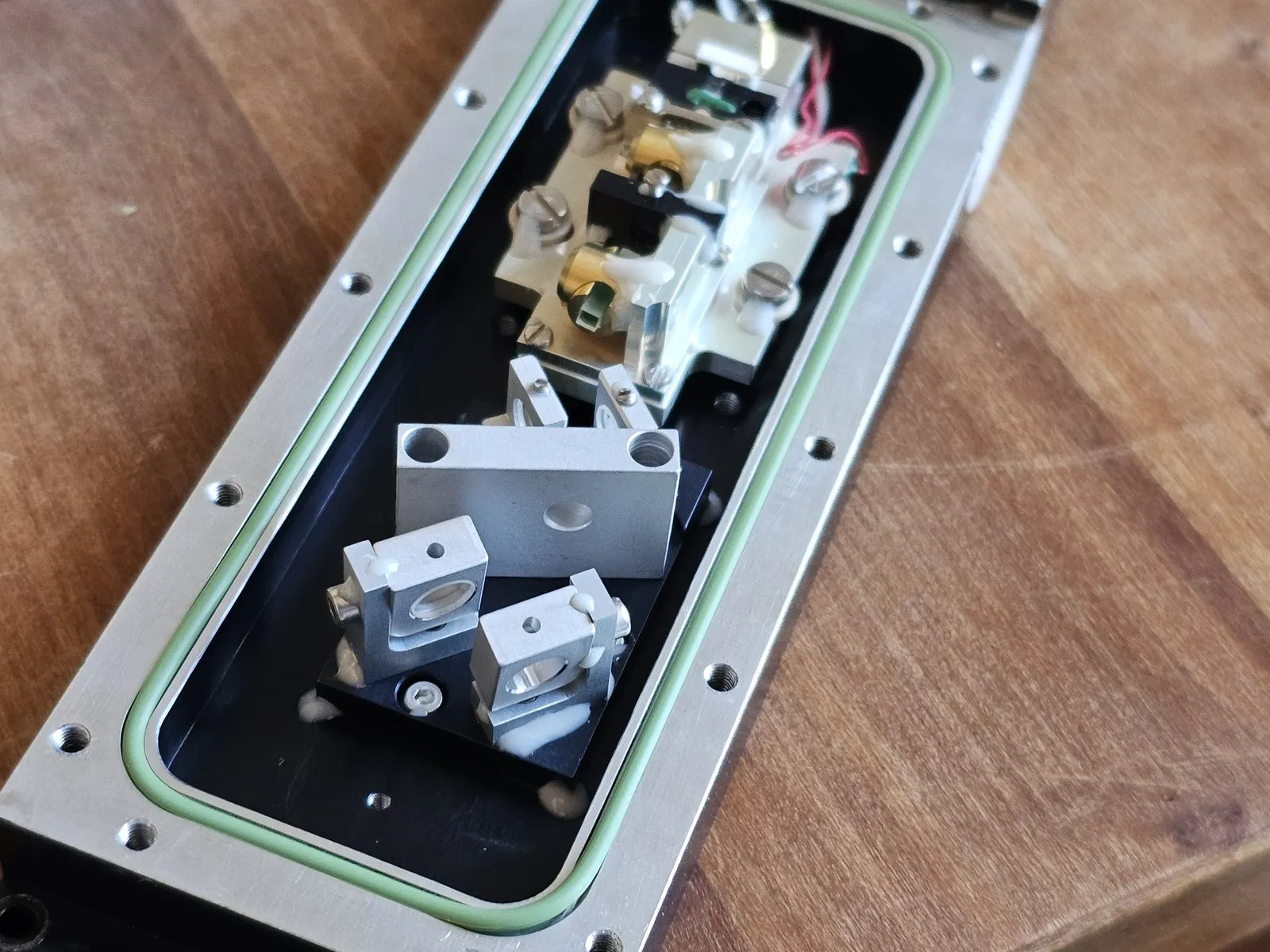
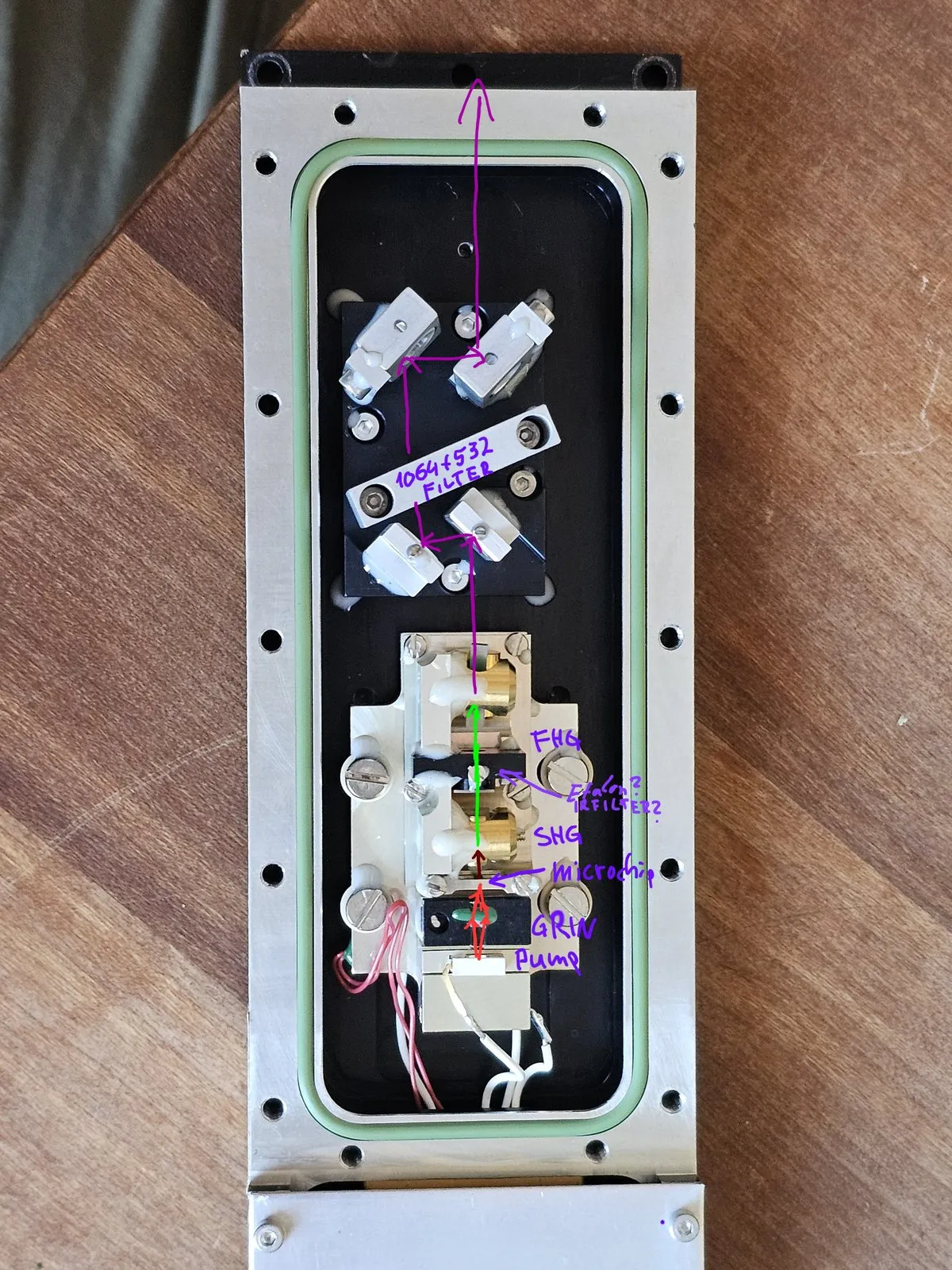
| Output | 266 nm (4th harmonic of 1064 nm) |
| Gain / Q-switch | Highly-doped Nd:YVO₄ bonded to Cr⁴⁺:YAG (passive, saturable-absorber) |
| Pulse width | ~500 ps |
| Microchip size | ~1 mm³ (≈1 mm per edge) |
| Cavity | Plane-parallel Fabry–Pérot; TEM₀₀ stabilized by pump thermal lens + GRIN focus |
| Conversion | 1064 → 532 (SHG) → 266 nm (4HG); separators reflect 266 nm only |